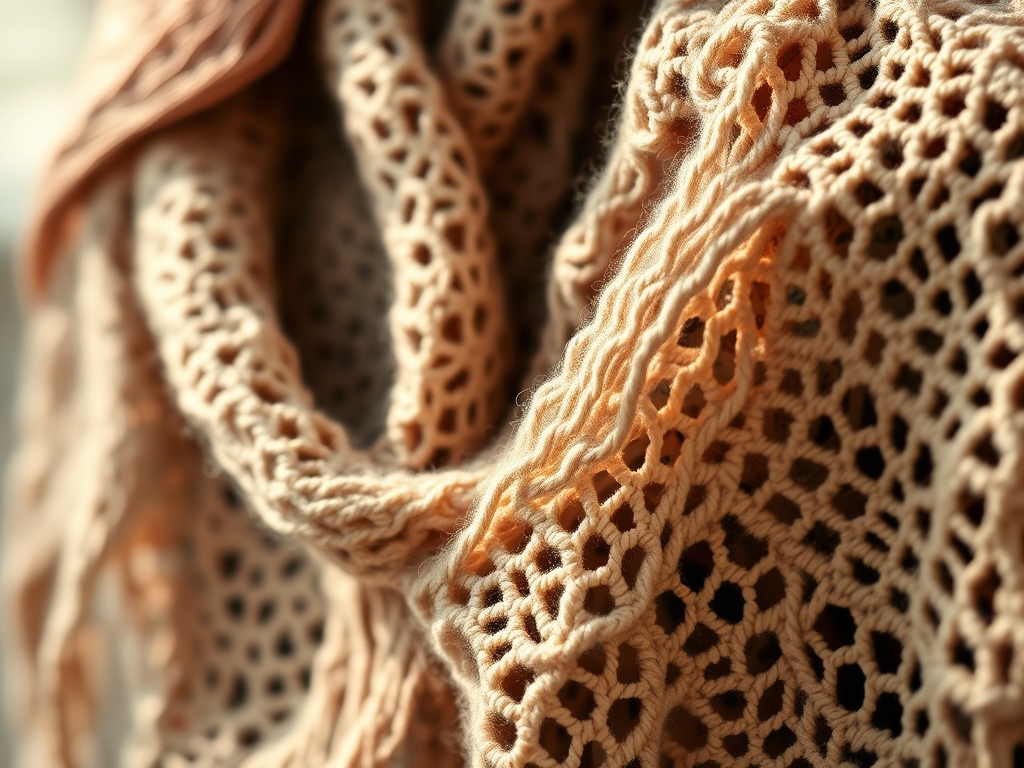
Imagine the weight of a cloud resting against your collarbone; that is the specific gravity of the fiber we are manipulating today. When you dive into the world of Hand Knit Lace Shawls, you are not just playing with yarn; you are engineering a structural masterpiece out of negative space and high-tensile protein fibers. The sensation of raw silk or ultra-fine merino sliding through your fingers is almost hypnotic. It is a tactile conversation between your skin and the microscopic scales of the wool. We are looking for that perfect balance of drape and structural integrity. If the fiber is too slick, the lace collapses; if it is too toothy, the delicate yarn-overs lose their crisp definition. We are aiming for a fabric that feels ethereal yet possesses the tensile strength to survive a wedding day or a gala. This is high-stakes crafting where every millimeter of gauge determines whether your masterpiece floats like a veil or hangs like a heavy curtain.
THE STUDIO KIT
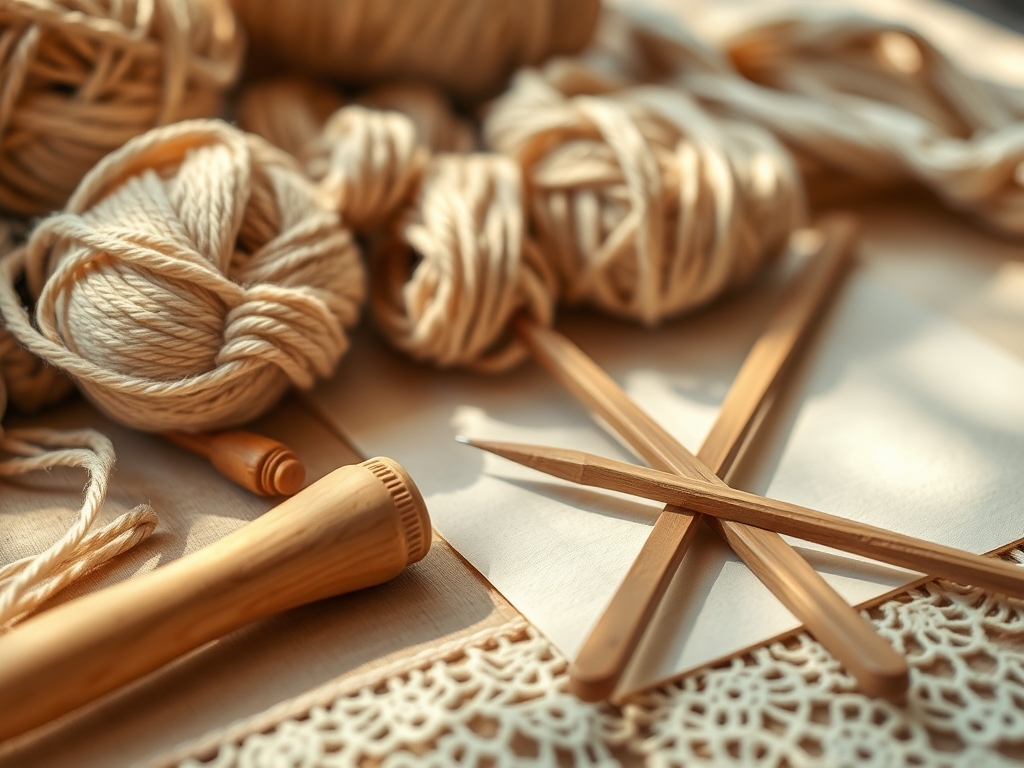
To execute these five intricate charts, your standard craft bin will not suffice. You need precision instruments. Start with stainless steel circular needles featuring aggressively tapered lace tips. Unlike blunt bamboo, these allow you to perform a "knit three together" maneuver without shredding the yarn plies. You will also need a digital caliper to measure your yarn diameter if you are working from an unlabeled stash; consistency is the law of the land here. A set of stainless steel T-pins and blocking wires are non-negotiable for the final stage. These tools allow you to apply uniform tension across the scalloped edges without causing rust spots on your delicate work.
Material Substitutions: If you cannot source 100 percent mulberry silk, look for a tencel or bamboo blend. These cellulose-based fibers offer a similar luster and "cool-to-the-touch" thermal conductivity. However, be warned that plant fibers lack the "memory" of animal proteins; they will not "spring back" after being stretched, so your blocking must be absolute perfection. Avoid acrylics for these specific charts. The synthetic polymers do not possess the porous quality required to absorb steam, meaning your lace will never truly open up and "bloom" the way a natural fiber does.
THE TEMPO
The "Maker's Rhythm" for Hand Knit Lace Shawls is less of a sprint and more of a metronomic trance. You are looking at a three-phase commitment. Phase one is the Foundation Phase, taking roughly ten hours, where you establish the spine of the shawl. Phase two is the Expansion Phase, which is the bulk of the work. Depending on the complexity of the chart, this can take sixty to eighty hours of focused labor. Finally, the Blocking Phase takes about forty-eight hours, though most of that is passive drying time.
Do not fight the tempo. If you try to rush a complex lace chart, your ergonomic efficiency drops, leading to hand fatigue and dropped stitches. Professional makers often use a "pomodoro" style rhythm; fifty minutes of intense charting followed by ten minutes of stretching to prevent carpal tunnel strain. Your brain needs those breaks to reset its pattern recognition software.
THE CORE METHOD
1. The Elastic Long-Tail Cast On
We begin by establishing a base that can expand up to 200 percent of its original width during blocking. Use a needle two sizes larger than your working needle for this step. This prevents the "smile" effect where the top edge of the shawl is too tight to drape around the shoulders.
Mastery Tip: This relies on the physics of loop geometry. By increasing the diameter of the initial loops, you provide the necessary slack for the fabric to migrate outward during the wet-blocking process.
2. Executing the Yarn-Over Increase
The yarn-over is the fundamental unit of lace. It creates a deliberate hole in the fabric. To keep these uniform, you must maintain consistent surface tension on your feeder yarn. If one yarn-over is looser than the next, the "eye" of the lace will look distorted and amateur.
Mastery Tip: Observe the capillary action when you eventually wash the piece; the water will travel through these apertures. If the holes are inconsistent, the water evaporates unevenly, potentially leading to localized shrinking or "puckering."
3. Precision Decreasing for Symmetry
Lace charts rely on "SSK" (slip, slip, knit) and "K2Tog" (knit two together) to slant the stitches left or right. This creates the architectural lines of the chart. You must perform these with surgical precision to ensure the "ribs" of the lace align perfectly with the central axis.
Mastery Tip: This is about directional force. A left-leaning decrease pulls the fabric in one direction; you must balance it with a right-leaning decrease to maintain the structural equilibrium of the garment.
4. The Lifeline Insertion
Every twenty rows, use a tapestry needle to thread a contrasting silk cord through every live stitch on the needle. This is your "save point." If you make a mistake five rows up, you can rip back to this line without losing your entire project.
Mastery Tip: This acts as a mechanical stop. It prevents the unraveling of the lower tiers of the fabric by physically blocking the loops from sliding through one another.
5. The Aggressive Wet Block
Once the knitting is done, the shawl will look like a shriveled raisin. You must submerge it in room-temperature water with a pH-neutral wool wash. After soaking, pin it out on foam mats using your blocking wires to stretch it to its limit.
Mastery Tip: This process utilizes hydrogen bonding. Water breaks the temporary bonds between the fiber molecules. As the shawl dries in a stretched position, new bonds form, "setting" the lace in its open, intricate state permanently.
THE TECHNICAL LEDGER
Maintenance & Longevity: Never hang a lace shawl on a hanger. The gravitational pull will distort the delicate lace over time, leading to "growth" in the vertical axis. Always store it flat, wrapped in acid-free tissue paper to prevent fiber degradation from UV light or atmospheric moisture.
Material Variations:
- Sustainable: Recycled cashmere offers incredible warmth-to-weight ratios.
- Premium: Vicuna or Qiviut fibers provide unparalleled softness but require extreme care due to their short staple length.
- Experimental: Stainless steel core yarns can be used to create "sculptural" lace that holds its shape without pinning.
The Correction:
- The Dropped Yarn-Over: Use a crochet hook to "ladder up" the stitch, ensuring you pick up the correct horizontal bar to maintain the pattern's mathematical sequence.
- The Twisted Stitch: If a stitch looks "closed," it was likely knit through the back loop. You must un-knit (tink) back to that point to reset the stitch orientation.
- The Tension Gap: If a transition between a knit and a purl is too loose, use a dull tapestry needle to manually redistribute the excess yarn into the neighboring stitches.
Studio Organization: Keep your lace projects in a breathable cotton bag. Plastic bins can trap moisture, leading to mildew or "foxing" on natural fibers. Use a cedar block or lavender sachet to repel moths, as they find the high-protein content of lace yarns irresistible.
THE FINAL REVEAL
There is nothing quite like the moment you unpin a shawl from the blocking mats. It transforms from a damp, tangled mess into a crisp, geometric lattice that catches the light. The Hand Knit Lace Shawls you have created are more than just accessories; they are artifacts of patience and physics. When you wrap one around your shoulders, you feel the collective strength of thousands of interlocking loops. The way the light passes through the "eyelets" creates a shadow play on the skin that no machine-made garment can replicate. You have successfully conquered the charts and mastered the fiber.
STUDIO QUESTIONS
What is the best fiber for a beginner's lace shawl?
A wool-silk blend is ideal. The wool provides "grip" so stitches do not slide off the needles, while the silk adds the necessary luster and drape. This combination offers the most forgiving tensile response during the learning phase.
How do I fix a hole that wasn't supposed to be there?
This is usually a "phantom yarn-over." You can fix this during the finishing stage by using a small length of matching yarn and a duplicate stitch technique to bridge the gap and reinforce the surrounding fiber matrix.
Can I use variegated yarn for complex lace?
It is risky. Highly variegated "busy" yarns often camouflage the intricate stitch work. For complex charts, stick to solid or semi-solid colors to ensure the architectural details and "negative space" of the lace remain the focal point.
Why does my lace look messy before blocking?
This is normal. Before blocking, the internal stresses of the twisted fibers cause the fabric to bunch. The "magic" happens when you submerge it in water, allowing the fibers to relax and redistribute into their intended geometric alignment.