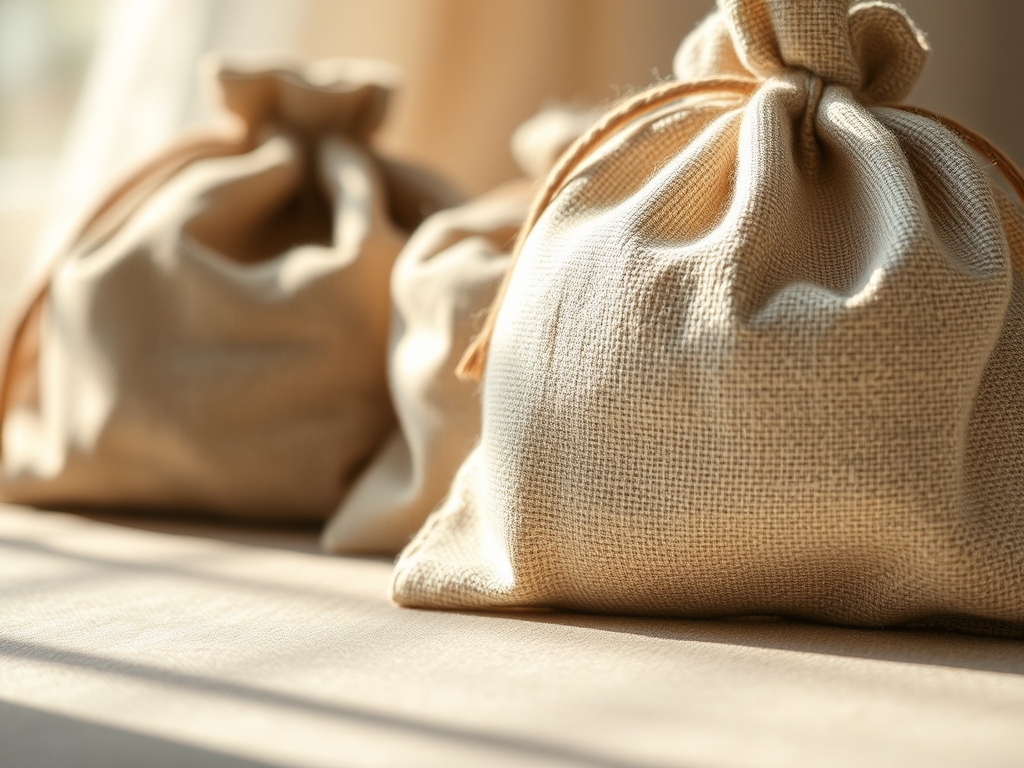
Grab your favorite shears and clear the workbench because we are about to dive into the tactile world of fiber physics. There is nothing quite like the raw, cellular grip of high-quality flax under your fingertips. When you begin crafting hand stitched linen pouches, you are not just sewing; you are manipulating a cellulose-based structure with incredible tensile strength. Linen is unique because its fibers are longer and more lustrous than cotton, providing a structural integrity that protects your delicate crystals from external kinetic energy. As you run your needle through the weave, you will feel that characteristic resistance. It is a crisp, rhythmic feedback that tells you the grain is true. We are aiming for a finished product that feels grounded and ancient, yet technically precise. These pouches need to withstand the weight of heavy stones like hematite or raw quartz clusters without sagging or fraying at the seams. We are going to master the geometry of the drawstring to ensure your crystals stay secure while looking absolutely editorial.
THE STUDIO KIT
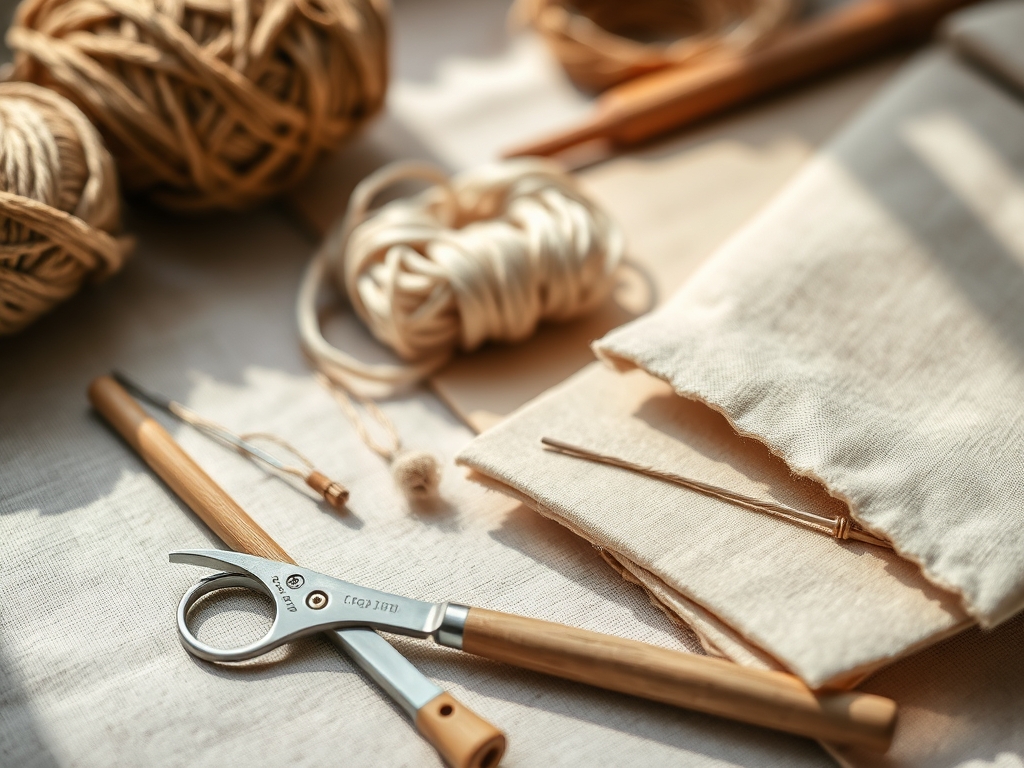
To execute these designs with professional precision, you need a kit that respects the material's porous nature. Start with a high-grade European linen, ideally between 5.5 to 7 ounces. This weight provides the perfect balance between flexibility for the drawstring and thickness for protection. You will also need a bone folder to create crisp, permanent creases in the fabric without scorching the fibers. For the stitching, select a waxed linen thread or a high-ply silk thread; the wax reduces friction as the thread passes through the weave, preventing the heat buildup that can weaken the strand.
Your tool bench should also include a pair of micro-serrated fabric shears to prevent the linen from shifting during the cut. Use a tailor's chalk or a silver heat-erase pen for marking your drawstring channels. For the drawstrings themselves, we are looking at leather cord, silk ribbon, or braided hemp. If you are looking for material substitutions, you can swap linen for a heavy hemp canvas if you want a more rugged, high-friction finish, or use a reclaimed vintage grain sack for a textured, historical aesthetic. Just remember that tighter weaves require a smaller needle gauge to avoid leaving permanent puncture holes in the substrate.
THE TEMPO
Creating a suite of hand stitched linen pouches is all about the Maker's Rhythm. This is the synchronized flow between your breath and the mechanical movement of the needle. For a single pouch, expect to spend about 15 minutes on the architectural layout and cutting phase. This is where you use your calipers or a clear acrylic ruler to ensure every corner is a perfect 90-degree angle. Precision here prevents the pouch from twisting once the drawstring is under tension.
The stitching phase takes approximately 30 to 45 minutes per pouch, depending on the complexity of your chosen drawstring design. This is the meditative core of the project where you maintain consistent stitch tension. Finally, the finishing phase, which includes burnishing the seams and threading the cord, takes about 10 minutes. Total production time per unit is roughly one hour. If you are batch-producing all six designs, you will find that your speed increases as your muscle memory adapts to the coefficient of friction inherent in the linen fibers.
THE CORE METHOD
1. The Geometric Layout
Start by measuring a rectangle that is exactly twice the height of your desired pouch plus two inches for the drawstring header. Use your rotary cutter and a self-healing mat to ensure the edges are perfectly straight along the warp and weft. If your cuts are even a few millimeters off-grain, the pouch will skew when you pull the strings.
Mastery Tip: Always align your long edges with the grain direction of the fabric. This utilizes the natural structural integrity of the flax fibers, preventing the bag from stretching vertically over time due to the gravitational pull of the crystals.
2. The Reinforced Side Seam
Fold the fabric right sides together. Use a backstitch for the side seams, as this provides the highest level of shear strength. Leave a gap exactly one inch from the top edge for the drawstring exit points. Ensure your stitches are spaced no more than 3mm apart to prevent small crystals from slipping through the gaps.
Mastery Tip: The backstitch creates a continuous line of thread on both sides of the fabric. This mimics a machine lockstitch but offers more elasticity, allowing the seam to absorb shocks if the pouch is dropped.
3. The Channel Construction
Fold the top edge down by half an inch, then another inch to create a clean, enclosed header channel. Use your bone folder to press this hem before stitching. This mechanical pressure collapses the air pockets between the fibers, making the fabric easier to pierce and ensuring the channel is uniform in width.
Mastery Tip: This double-fold technique utilizes capillary action to keep moisture away from the drawstring cord. By encasing the raw edge, you prevent the linen from unraveling into the channel, which would otherwise create friction and jam the drawstring mechanism.
4. The Drawstring Integration
Select your cord based on the weight of the crystal. For heavy stones, use a high-friction cord like suede. For lighter, delicate tumbled stones, a silk cord allows for a smoother glide. Thread the cord through the channel using a safety pin or a specialized bodkin, ensuring it loops entirely around the circumference.
Mastery Tip: To prevent the cord from slipping out, use a stopper knot like a figure-eight. This increases the surface area at the end of the cord, making it physically impossible for the knot to retreat into the channel under high tensile load.
THE TECHNICAL LEDGER
Maintenance & Longevity: Linen is incredibly durable but hates acidic environments. Store your hand stitched linen pouches in a cool, dry place. If they become soiled, hand wash in pH-neutral soap to preserve the lignin within the fibers. Air dry only; high heat from a dryer can cause the fibers to become brittle and snap.
Material Variations: For a premium version, use hand-dyed indigo linen which offers natural antimicrobial properties. For a sustainable approach, source OEKO-TEX certified flax which ensures no harmful chemicals were used during the retting process.
The Correction:
- The Pucker: If your seam is gathering, your tension is too high. Fix this by gently pulling the fabric horizontally to redistribute the thread.
- The Fray: If the drawstring exit point is shredding, apply a tiny amount of fabric resin or a buttonhole stitch to reinforce the orifice.
- The Twist: If the pouch hangs crooked, the grain was misaligned during cutting. The only fix is to recut along a pulled-thread line to find the true grain.
Studio Organization: Store your linen flat in a dark drawer. Exposure to UV light causes photodegradation, which yellows the fibers and reduces their break strength. Use acid-free tissue paper between layers if you are storing pouches with metallic embroidery.
THE FINAL REVEAL
There is a profound sense of satisfaction when you pull those drawstrings and watch the linen gather into perfect, architectural pleats. Your hand stitched linen pouches are now more than just containers; they are engineered vessels designed to harmonize with the earth-grown energy of your crystals. The contrast between the matte, organic texture of the flax and the shimmering facets of a gemstone creates a stunning visual and tactile experience. You have successfully merged ancient craft with modern physics, creating something that is built to last for decades.
STUDIO QUESTIONS
What is the best thread for linen?
Waxed linen or silk thread is superior. The wax coating acts as a lubricant, reducing fiber abrasion during the sewing process and increasing the overall lifespan of the seam under the weight of heavy crystals.
How do I stop the linen from fraying?
Use a double-fold hem or a flat-felled seam. These techniques encapsulate the raw edges within the structure of the fold, preventing the loose weft threads from migrating and unraveling over time.
Can I use a sewing machine instead?
Yes, but hand stitching offers better tension control. Hand-worked seams are more flexible and less likely to snap when the pouch is stuffed with irregularly shaped, sharp-edged crystal clusters.
Why does my drawstring get stuck?
This is usually caused by internal friction or a narrow channel. Ensure your channel is at least twice the diameter of your cord and clear of any loose interior threads that could snag the material.