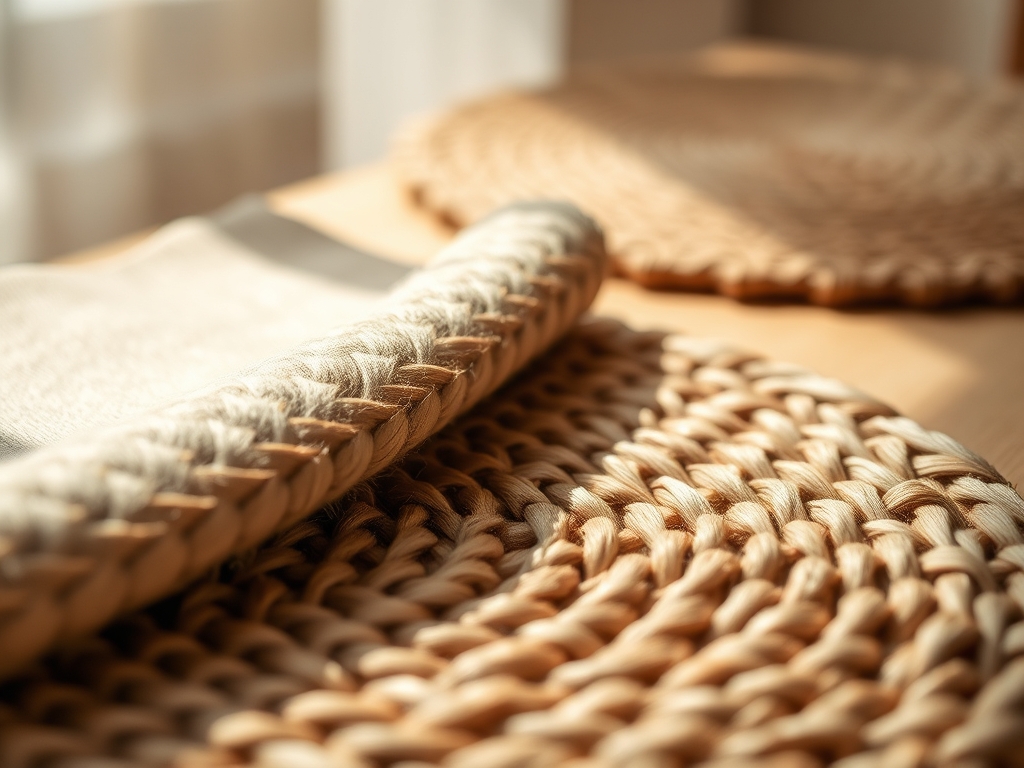
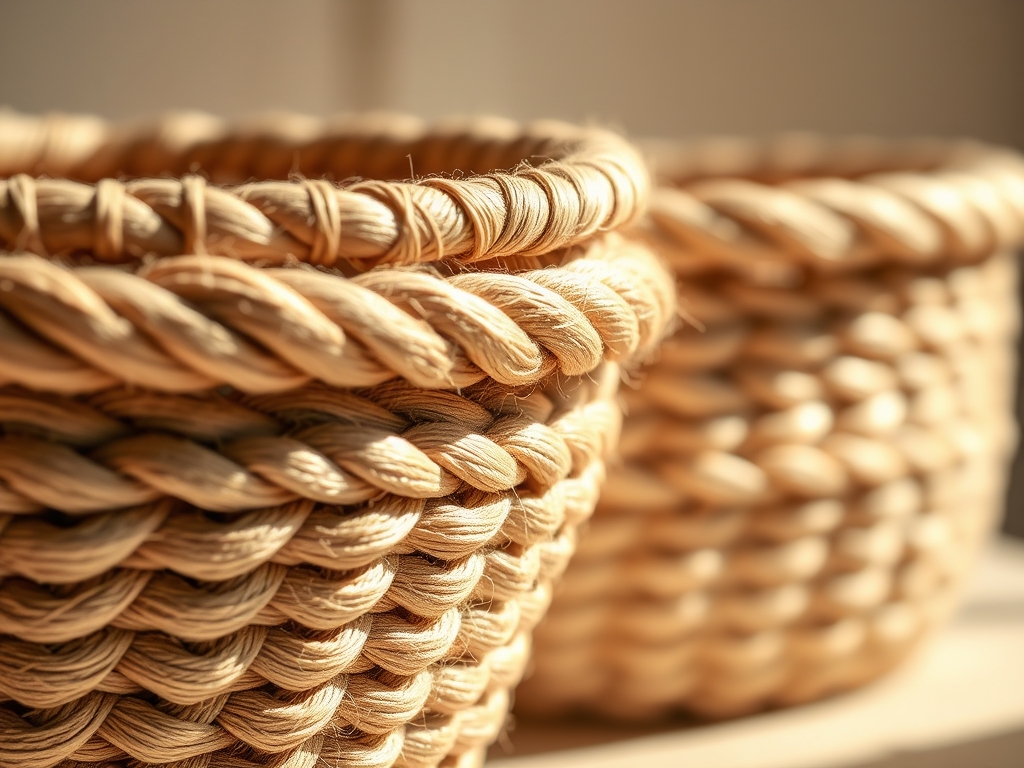
Close your eyes and listen to the rhythmic snap of unbleached cotton cord as it hits the studio floor. There is a specific, grounding weight to high-quality sash cord that transforms simple fiber into architectural structure. When we talk about Woven Rope Baskets, we are not just discussing hobbyist crafts; we are manipulating the physics of friction and tension to create vessels capable of carrying heavy loads. Feel that slight grit on your palms? That is the natural seed casing left in the raw fiber, providing the essential grip needed for a secure coil. Most beginners overlook the tactile feedback of the rope, but you and I know better. We are looking for that perfect balance of a dense inner core and a soft, braided exterior. As the rope twists, it creates potential energy that we will harness through specific nautical knots. This is where the magic happens. We are turning a linear material into a three dimensional masterpiece that defies gravity and holds its shape under the pressure of heavy storage.
THE STUDIO KIT
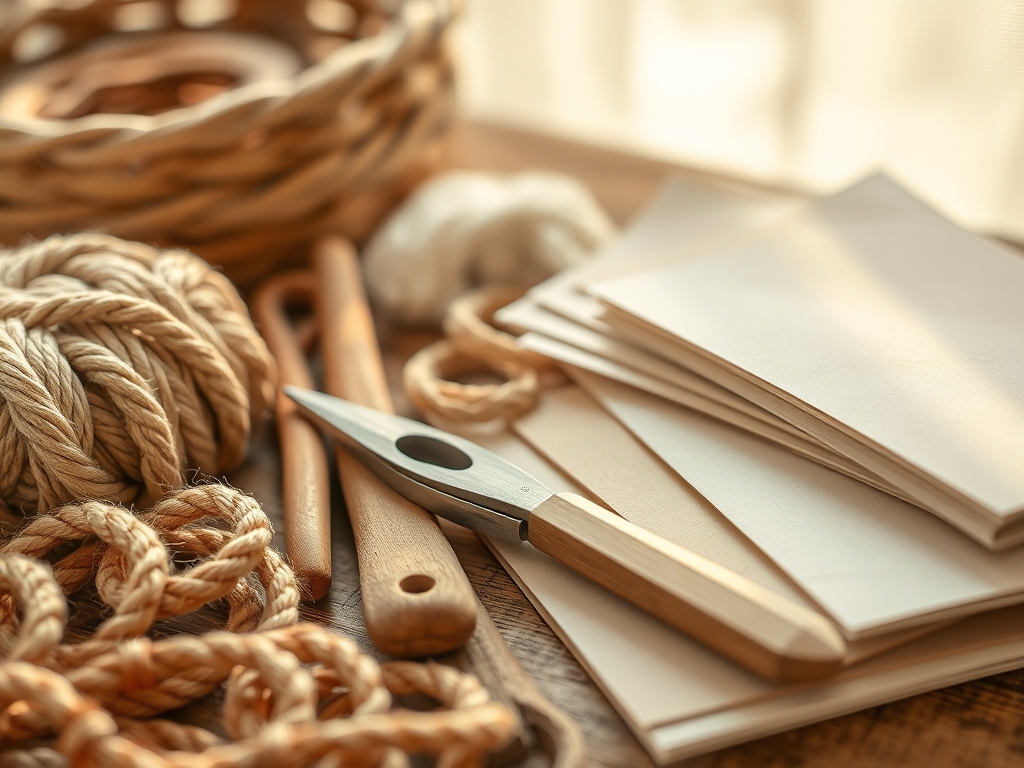
To master the structural integrity of these vessels, your workstation must be equipped with tools that respect the tensile strength of your cordage. You will need a high-torque sewing machine if you are stitching, but for the knot-heavy version, your primary tools are your hands and a few precision instruments. Start with a pair of heavy duty shears or a rotary cutter with a fresh tungsten blade to ensure clean, non-frayed ends. You will also need a stainless steel awl for piercing dense knots and a bone folder to burnish the rope flat during the transition phases.
The material choice is paramount. I recommend a 7mm or 10mm triple-strand cotton rope with a polyester core. The polyester core provides the "bone" of the basket, preventing the cotton from stretching out of shape when filled with heavy tools or firewood. For Material Substitutions, you can swap cotton for manila rope if you want a rugged, weather-resistant finish, though manila has a higher abrasion coefficient and will require gloves. If you are going eco-friendly, recycled PET rope offers incredible durability and a modern, glossy sheen that resists moisture and mold.
THE TEMPO
The "Maker's Rhythm" is a psychological state where your movements become automated and fluid. For a large storage basket, expect a total production time of four to six hours. The first hour is the Foundation Phase, where you establish the base diameter. This requires intense focus on concentric alignment to ensure the basket does not wobble. The middle three hours are the Ascension Phase, a meditative stretch where you build the walls using nautical knots. This is the "Tempo" where you find your flow. Finally, the Closure Phase takes about forty-five minutes to secure the rim and integrate the handles. Do not rush the tensioning; if you pull too hard in one section, the basket will develop a "waist" and lose its cylindrical perfection.
THE CORE METHOD
1. The Crown Knot Foundation
Every heavy duty basket begins with a stabilized center. Instead of a simple coil, we use a Crown Knot to lock the starting fibers in place. This prevents the bottom of the basket from "popping" out under the weight of heavy items. Lay four strands in a cross pattern and weave them over and under in a circular motion.
Mastery Tip: This step relies on interlocking friction. By crossing the strands at 90 degree angles, you create a mechanical lock that increases in strength as more weight is added to the vessel.
2. The Fisherman's Bend Transition
As you move from the flat base to the vertical walls, use a Fisherman's Bend to join new lengths of rope. This knot is famous for its security in wet conditions, making it overkill for a basket, which is exactly why we use it. It ensures that the transition point is the strongest part of the build.
Mastery Tip: The science here is load distribution. The Fisherman's Bend allows the tension to bypass the joint and travel along the continuous fibers, preventing a structural failure at the seam.
3. The Decorative Turk's Head Rim
Once you reach your desired height, the rim needs a finish that can withstand the constant "pull" of being lifted. The Turk's Head knot creates a braided, tubular ring that encircles the top. It adds a massive amount of lateral stability to the opening.
Mastery Tip: This knot utilizes triaxial braiding physics. By weaving the rope in three directions simultaneously, you create a rim that cannot be crushed or deformed by heavy contents.
4. The Double Carrick Bend Handle
For storage that actually moves, you need handles that are integrated into the body. The Double Carrick Bend is a flat, symmetrical knot that we weave directly into the wall. It provides a wide surface area for your grip, making it highly ergonomic.
Mastery Tip: The flat profile of this knot increases the surface area contact between the handle and the basket wall, reducing the "psi" (pounds per square inch) exerted on any single fiber.
5. The Whipped End Finish
To prevent the rope from unraveling over years of use, we finish the ends with Common Whipping. Use a waxed linen thread to tightly bind the tail of the rope. This is a traditional maritime technique that looks incredibly professional and clean.
Mastery Tip: This creates radial compression. The tight coils of linen thread squeeze the rope fibers together, making the end of the rope act like a solid plastic cap without using any heat or glue.
THE TECHNICAL LEDGER
Maintenance & Longevity: Cotton rope is hygroscopic, meaning it absorbs moisture from the air. To maintain the shape of your Woven Rope Baskets, avoid placing them in damp basements without a protective sealant. A light spray of fabric protector can help repel liquids. If the basket becomes misshapen, lightly steam it with a garment steamer and "mold" it back into place while the fibers are warm and pliable.
Material Variations:
- Sustainable: Hemp rope offers the highest tensile strength of any natural fiber but can be scratchy.
- Recycled: T-shirt yarn provides a soft, chunky aesthetic but lacks the structural "bone" for heavy storage unless doubled up.
- Premium: Hand-dyed indigo cotton rope adds a high-end designer feel but requires a fixative to prevent color transfer.
The Correction:
- The Lean: If your basket leans to one side, your tension is uneven. Fix this by using a caliper to measure the distance between knots on opposing sides.
- The Gap: Visible gaps between coils mean your rope gauge is too small for your knot pattern. Solve this by adding a "filler" cord or tightening the vertical weave.
- The Fray: If the rope ends are blooming, your shears were dull. Trim with a jeweler's saw or a brand new blade and immediately apply a whipping or a drop of archival glue.
Studio Organization: Store your rope on a vertical spool rack to prevent "kinking." Kinks in the rope disrupt the grain direction of the fibers, leading to weak spots in your knots. Keep your finished baskets nested by size to maintain their circular memory.
THE FINAL REVEAL
Look at that structure! You have just transformed a pile of limp cordage into a masterpiece of engineering. The way the light catches the ridges of the Turk's Head rim is absolutely stunning. These Woven Rope Baskets are not just for show; they are rugged, heavy-duty storage solutions that tell a story of craftsmanship and physics. You should feel the weight and the resistance; that is the sign of a job well done. Whether you are tossing in heavy blankets or organizing a collection of vintage magazines, this basket is built to outlast the trends.
STUDIO QUESTIONS
Which rope is best for heavy storage baskets?
A 10mm cotton rope with a polyester core is ideal. The cotton provides the tactile grip and aesthetic appeal, while the synthetic core offers the tensile strength required to hold heavy loads without sagging or stretching over time.
How do I clean a woven rope basket?
Spot clean with a damp cloth and mild detergent. Avoid total immersion, as the inner core can trap water, leading to mildew. For deep cleaning, use a vacuum with a brush attachment to remove dust from the interstices of the knots.
Why does my basket look lopsided?
Lopsidedness is usually caused by inconsistent tensioning. If you pull the rope tighter on one side of the coil than the other, the basket will migrate in that direction. Use a consistent "maker's rhythm" to ensure every knot is uniform.
Can I make these baskets without a sewing machine?
Yes, by using the five nautical knots described above. Knotting creates a mechanical bond that is often stronger than a stitched seam. This method relies on friction and interlocking geometry rather than thread, making it perfect for heavy duty use.