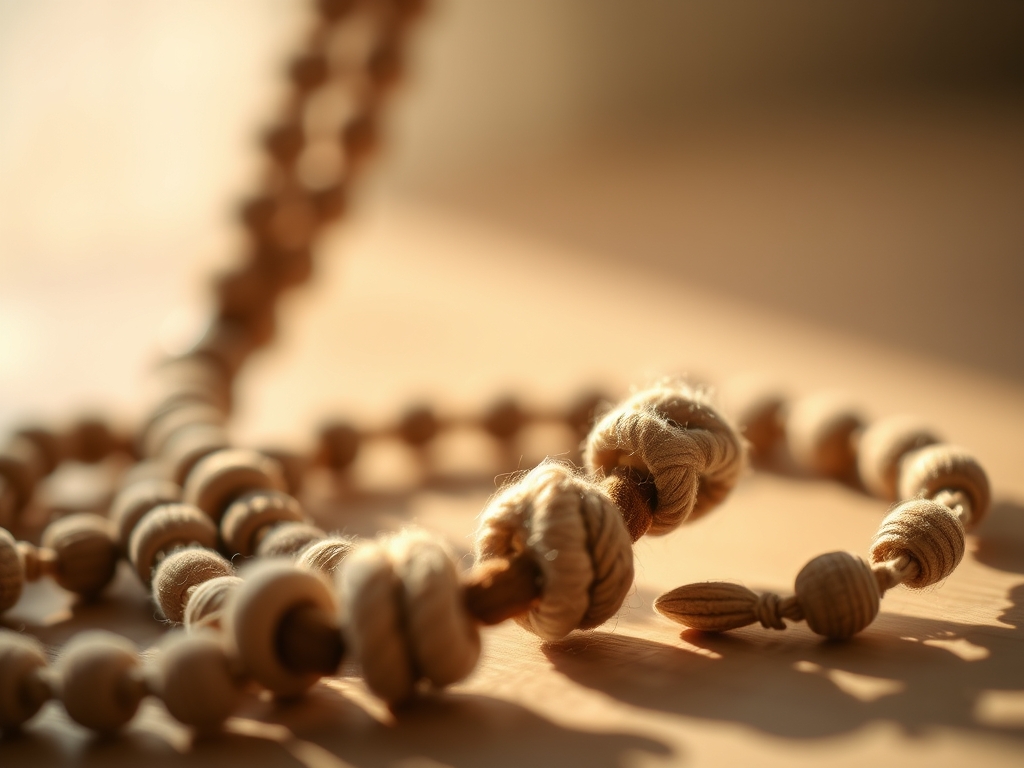
Imagine the weight of ninety-six carats of earth sitting in your palm; it is cool, dense, and humming with a frequency that only natural minerals possess. When you begin crafting hand knotted mala beads, you are not just making jewelry; you are engineering a tactile calculator for the soul. The friction of the silk cord against your skin creates a sensory anchor that grounds you before you even begin your first mantra. We are looking for that perfect balance between structural integrity and fluid drape. If the knots are too tight, the strand becomes a rigid stick; if they are too loose, the beads clatter with a hollow, cheap resonance. We want a rhythmic, consistent spacing that feels like a heartbeat under your thumb. This process requires patience and a deep understanding of material physics, specifically how tension affects the lifespan of natural fibers. Grab your coffee and clear your workbench, because we are about to dive into the high-stakes world of micro-knotting where every millimeter of slack counts toward the final masterpiece.
THE STUDIO KIT
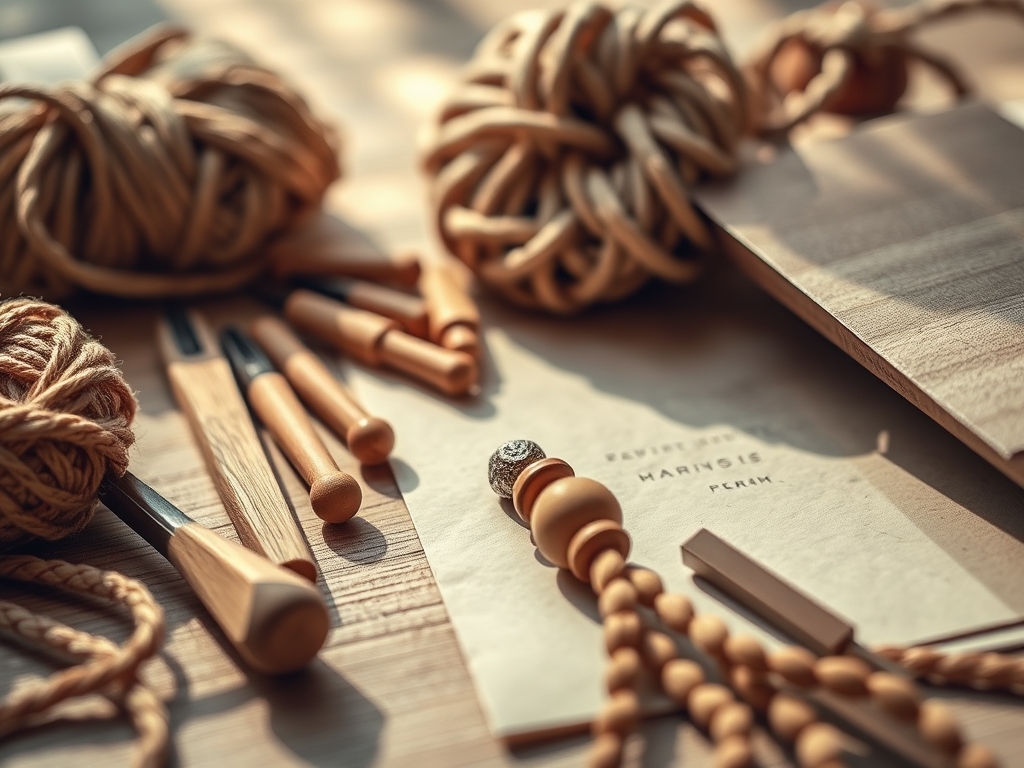
To build a professional-grade mala, your inventory must account for the tensile strength of your threading material. I recommend a size 6 or 8 twisted silk cord with an integrated needle. Silk is the gold standard because it has a natural elasticity that absorbs the shock of daily use without snapping. You will also need a fine-point jeweler's awl to guide your knots flush against the bead surface; this tool is non-negotiable for achieving zero-clearance spacing.
For the stones, use a digital caliper to verify that your 8mm beads are uniform. Natural stones often have a variance of 0.5mm, which can throw off the total length of your 108-count strand. You will also need a sharp pair of thread snips and a beeswax block to coat the cord, which reduces fraying and increases the coefficient of friction during the knotting process.
Material Substitutions: If you cannot source silk, a bonded nylon S-lon cord is a high-durability alternative. It lacks the organic drape of silk but offers superior resistance to moisture and UV degradation. For the beads, if semi-precious stones are too heavy for your neck, consider sandalwood or rudraksha seeds, which are porous and lightweight but require a thicker cord gauge due to their larger drill holes.
THE TEMPO
The "Maker's Rhythm" is a psychological state where the repetitive motion of the hands allows the brain to enter a flow state. For a standard 108-bead mala, expect a total production time of three to four hours. The breakdown is strategic: thirty minutes for material inspection and layout; two hours for the primary knotting phase; and one hour for the construction of the guru bead and tassel.
Do not rush the tensioning phase. If you find your heart rate increasing or your hands cramping, step away. The consistency of your knots is directly tied to your physical state. Professional makers often work in "sets of 27," which is one-quarter of the mala, allowing for natural breaks to check the structural alignment and ensure the cord is not twisting or developing "kinks" from over-handling.
THE CORE METHOD
1. The Foundation and Anchor
Start by stretching your silk cord to its maximum elastic limit. This prevents the mala from sagging after a week of wear. Secure your first bead, the "Guru Bead," which acts as the structural keystone of the entire loop. Use a double overhand knot to lock it in place.
Mastery Tip: The science here is all about load distribution. By pre-stretching the cord, you are aligning the internal fibers so they don't shift under the weight of the stones later. This ensures the 108-bead count remains a precise length over years of use.
2. The Precision Knotting Sequence
Slide your first stone down to the anchor. Form a loop around your index and middle fingers, then use your jeweler's awl to catch the thread. Place the tip of the awl exactly where the cord exits the bead hole and slide the knot down the metal shaft until it sits flush against the stone.
Mastery Tip: This utilizes capillary action in reverse; you are using the tool to displace air and space. The awl acts as a temporary mandrel, ensuring that the knot occupies the smallest possible volume, which maximizes the surface contact between the knot and the bead.
3. Maintaining Lateral Tension
As you progress, you must pull the cord "away" from the previous bead while tightening the current knot. This prevents "ghosting," where small gaps of thread appear between the bead and the knot. Keep your hands low to the table to maintain a consistent ergonomic angle.
Mastery Tip: This is a lesson in friction coefficients. Coating your thread in beeswax increases the "grip" of the silk against itself, meaning the knot won't slip back open while you are trying to seat it against the bead.
4. The Guru Bead Integration
Once all 108 beads are knotted, bring both ends of the cord through the three-hole Guru Bead. This is the most complex junction because it must support the weight of the entire strand plus the tassel. Use a surgical knot here for maximum security.
Mastery Tip: The Guru Bead acts as a mechanical stop. Because it is usually larger and heavier, it requires a knot with a larger diameter than the internal bore of the bead to prevent "pull-through" under high tension.
5. Tassel Construction and Burnishing
Wrap your remaining silk around a piece of heavy cardstock to create the tassel. Tie it off with a constrictor knot and then "burnish" the head of the tassel with a smooth tool to flatten the threads. Trim the ends with a rotary cutter for a perfectly level finish.
Mastery Tip: Burnishing the silk head realigns the molecular structure of the fibers, making them lie flat and reflective. This creates a professional, high-sheen look that resists fraying at the most high-wear point of the mala.
THE TECHNICAL LEDGER
Maintenance & Longevity: To keep your hand knotted mala beads in peak condition, avoid water. Natural silk will swell when wet and shrink as it dries, which can lead to "bead pinching." Clean your stones with a dry, microfiber cloth to remove skin oils that can degrade the cord's integrity over time.
Material Variations:
- Sustainable: Use recycled sari silk or organic hemp cord.
- Premium: Grade AAA Labradorite or Lapis Lazuli with 14k gold spacer beads.
- Industrial: Paracord 95 for a "rugged" mala that can withstand extreme environments.
The Correction:
- The Gap: If you see a gap, do not untie it. Use a drop of hypo-cement on the knot and push the bead into it to "reset" the bond.
- The Fray: If the cord frays mid-project, use a thread burner to cauterize the end immediately.
- The Twist: If the mala curls like a snake, the tension is too high. Steam the strand over a kettle to relax the fibers.
Studio Organization: Store your malas flat or in a velvet-lined tray. Hanging them for long periods causes "gravitational creep," where the weight of the stones permanently elongates the silk cord, ruining the tight knotting you worked so hard to achieve.
THE FINAL REVEAL
Look at that drape! There is nothing quite like the heavy, rhythmic swing of a finished mala. When you hold it, the 108 beads should feel like a single, cohesive unit rather than a loose collection of parts. The knots are crisp, the stones are secure, and the tassel has that satisfying "swish" that only comes from high-quality silk. You have successfully engineered a tool that is as durable as it is beautiful. Whether you are using it for deep meditation or just wearing it as a reminder of your own creative power, this mala is built to last a lifetime.
STUDIO QUESTIONS
How do I choose the right cord size for my beads?
Use a caliper to measure the bead's drill hole. Your cord should occupy roughly 60 percent of the hole's diameter. If the cord is too thin, the knots will slip inside the bead; too thick, and you will struggle to thread it.
Why is my mala curling up instead of laying flat?
This is a classic tension imbalance. You likely pulled the knots too tight during the "Maker's Rhythm." To fix this, lightly steam the silk cord over boiling water to allow the fibers to expand and settle into a more relaxed state.
Can I use a needle instead of an awl?
You can, but a jeweler's awl is superior because of its tapered shape. The taper allows you to control the exact diameter of the knot as it closes, whereas a needle is uniform in width and offers less leverage for seating the knot.
How often should I re-string my hand knotted mala beads?
If you practice daily, check for structural fatigue every twelve months. If you notice the knots looking "fuzzy" or if the gaps between beads are widening, the silk is reaching its fatigue limit and needs to be replaced.