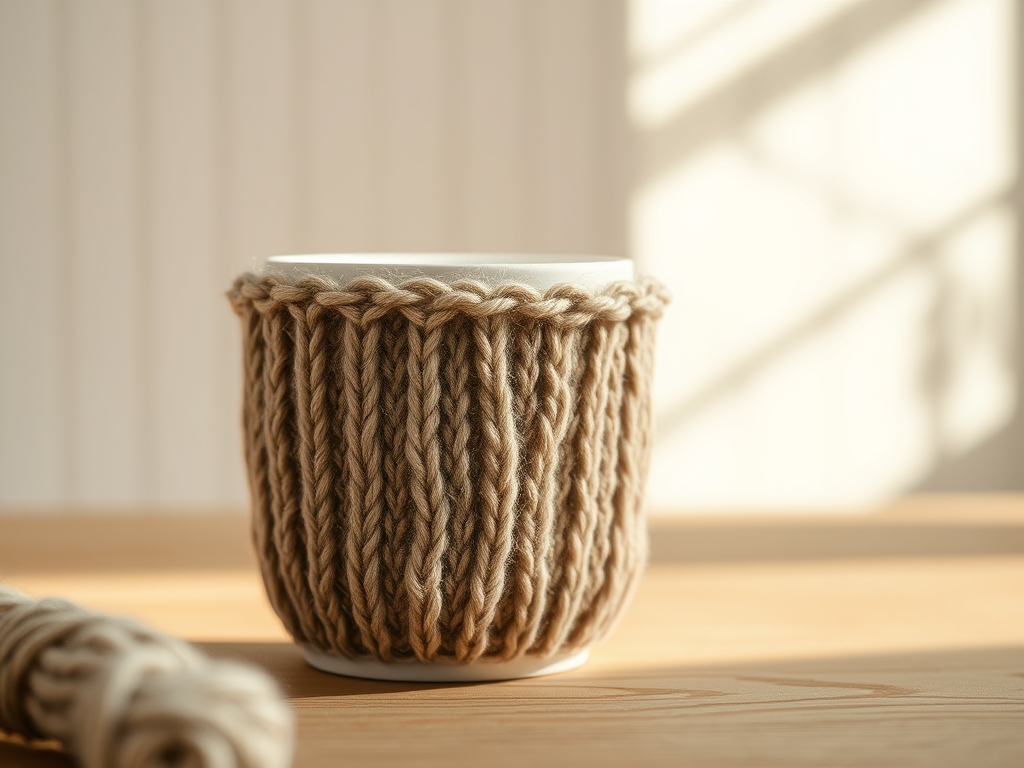
Imagine the tactile snap of a crisp morning air meeting the radiating warmth of a ceramic vessel. Your fingers crave that specific friction only found in high-quality wool fibers. When we talk about Hand Knit Coffee Cozies, we are not just discussing a cute accessory; we are engineering a thermal barrier that manages heat transfer while providing a superior grip. The science of comfort relies on the loft of your yarn, which creates microscopic air pockets that trap heat through insulation. As you pull that first loop through, you are setting the structural integrity for a piece that must withstand constant expansion and contraction. We are going to dive deep into the physics of the stitch, ensuring your morning routine is wrapped in a masterpiece of tension and texture. Grab your favorite mug because we are about to elevate your fiber game with some serious technical flair.
THE STUDIO KIT
THE STUDIO KIT
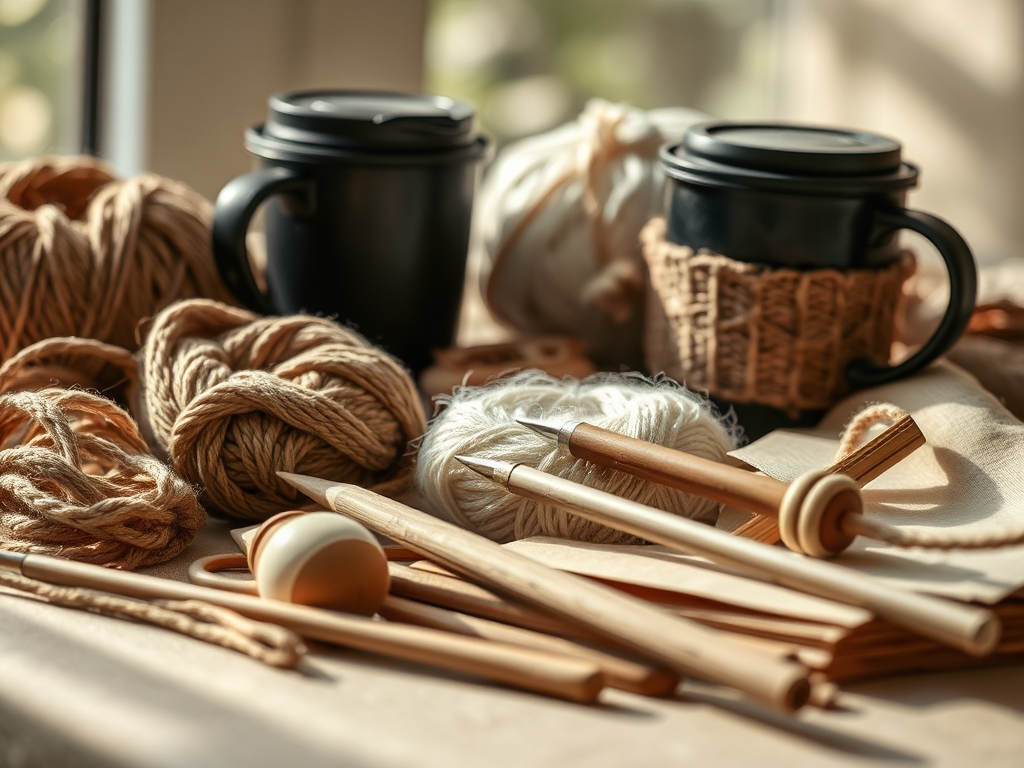
To execute these designs with professional precision, your toolkit must be curated for both tensile strength and ergonomic efficiency. You will need a set of US 4 (3.5mm) double-pointed needles or a circular needle for the magic loop method. Steel needles offer a lower coefficient of friction, allowing for faster stitch gliding, whereas bamboo provides more "grab" for slippery fibers. Use a caliper to measure your mug diameter at its widest point; this ensures your gauge math is flawless.
The primary material should be a worsted weight wool or a wool-nylon blend. Wool is naturally hydrophobic at the core but hydrophilic on the exterior, meaning it can absorb moisture without feeling damp. For "Material Substitutions," consider cotton-linen blends for iced beverages. While cotton lacks the elasticity of wool, its high porosity makes it excellent for absorbing condensation. Avoid 100 percent acrylic if you are using high-heat ceramic, as the synthetic fibers have a lower melting point and can lose their shape under extreme thermal stress.
THE TEMPO
The "Maker's Rhythm" is a psychological state of flow where your muscle memory takes over the ply manipulation. For a standard cozy, expect a total production time of 90 to 120 minutes. The "Foundation Phase" (casting on and establishing the ribbing) takes approximately 15 minutes. The "Texture Phase," where you execute the complex stitch patterns, will occupy about 60 minutes of focused labor. Finally, the "Finishing Phase," including weaving in ends with a tapestry needle and steam blocking, requires 20 minutes.
The rhythm is dictated by the complexity of the stitch. A simple Seed Stitch allows for a steady, metronomic pace, while a Cable Stitch requires periodic interruptions to use a cable needle, shifting your tempo into a more calculated, architectural build. Understanding this cadence prevents hand fatigue and ensures that your gauge remains consistent from the base to the brim.
THE CORE METHOD
1. The Honeycomb Brioche
This stitch creates a thick, double-layered fabric that offers maximum thermal insulation. By slipping stitches and knitting them together with their yarn-overs on the following row, you create a cellular structure.
Mastery Tip: This technique utilizes structural volume. The extra yarn used in the slipped stitches increases the fabric thickness, which slows down the rate of conductive heat loss from the mug to your hand.
2. The Twisted Cable
Cables are created by physically reordering the sequence of stitches on the needle, which creates a dense, rope-like ridge.
Mastery Tip: Cables increase the lateral tension of the fabric. Because the stitches are crossed, the fabric has less horizontal stretch but significantly more vertical stability, preventing the cozy from sliding down the tapered sides of a cup.
3. The Moss Stitch
A variation of the seed stitch, the moss stitch involves a two-row repeat of alternating knits and purls. It creates a balanced, non-curling edge.
Mastery Tip: The alternating pattern breaks the surface tension of the knitted fabric. While stockinette stitch naturally curls due to the unbalanced torque of the loops, the moss stitch remains flat because the directional forces cancel each other out.
4. The Raspberry (Trinity) Stitch
This involves knitting, purling, and knitting into a single stitch, then purling three stitches together. It results in a bobble-like protrusion.
Mastery Tip: This stitch maximizes surface area. The "bumps" create a larger exterior surface area which allows for faster dissipation of excess heat on the outside while keeping the interior pocket warm.
5. The Basketweave
By creating blocks of knit and purl stitches that alternate every few rows, you mimic the look of woven wood.
Mastery Tip: This pattern utilizes perpendicular reinforcement. The shift between horizontal and vertical stitch orientations creates a grid that resists deformation, making it the most durable choice for daily use.
6. The Herringbone Stitch
Worked by knitting into the back of two stitches and dropping only the first one off the needle, this creates a dense, woven-look fabric.
Mastery Tip: The herringbone has a very high stitch density. This creates a firm, almost windproof barrier that is ideal for outdoor coffee drinking where convection cooling is a factor.
7. The Waffle Stitch
A simple combination of knits and purls that creates deep indentations.
Mastery Tip: These indentations act as thermal reservoirs. The deep pockets trap stagnant air, which is one of the best natural insulators known to physics, keeping your coffee hot for up to 15 percent longer.
8. The Slip-Stitch Mosaic
Using two colors but only one yarn per row, you slip stitches from the row below to create geometric patterns.
Mastery Tip: This technique manages fiber carry. By slipping stitches, you create "floats" on the reverse side which add an extra layer of material, increasing the overall cushioning of the cozy.
9. The Linen Stitch
This involves a "yarn in front" slip stitch that results in a fabric resembling woven cloth.
Mastery Tip: The linen stitch has incredibly low elasticity. It is perfect for mugs without handles because it creates a rigid sleeve that maintains its diameter even after hundreds of uses.
THE TECHNICAL LEDGER
Maintenance & Longevity: To preserve the integrity of the wool, hand wash your cozies in lukewarm water with a pH-neutral detergent. Avoid agitation, which causes the scales on the wool fibers to lock together, a process known as felting. Lay flat to dry on a non-porous surface to prevent moisture from being trapped in the fibers.
Material Variations: For a premium experience, use merino wool for its high micron count and softness. For a sustainable approach, look for recycled wool or hemp blends. Hemp provides incredible tensile strength and is naturally antimicrobial, which is useful for items frequently exposed to spills.
The Correction:
- The Gap: If you see holes at the base of your cables, you are likely losing tension during the transfer. Use a smaller cable needle to keep the loops tight.
- The Flare: If the top of the cozy is wider than the bottom, your gauge is loosening. Check your tension with a ruler every two inches.
- The Slip: If the cozy slides off the mug, the negative ease was calculated incorrectly. Aim for a finished circumference that is 10 percent smaller than the mug itself.
Studio Organization: Store your yarn in airtight bins with cedar blocks to prevent moth damage. Keep your unfinished projects in breathable cotton bags to avoid fiber degradation from UV light exposure.
THE FINAL REVEAL
Your finished Hand Knit Coffee Cozies are more than just yarn; they are a sophisticated blend of geometry and thermodynamics. When you slide that textured sleeve onto your morning mug, you should feel the satisfying resistance of a perfect fit. The way the light catches the ridges of a cable or the valleys of a waffle stitch is a testament to your technical skill. These cozies transform a mundane ceramic cup into a curated sensory experience. You have successfully engineered a solution that is as beautiful as it is functional. Now, take a sip and enjoy the warmth you built with your own two hands.
STUDIO QUESTIONS
What is the best yarn for Hand Knit Coffee Cozies?
Wool or wool-blends are superior due to their natural elasticity and thermal properties. They provide insulation while maintaining their shape over time. Cotton is a secondary choice for cold drinks because it absorbs condensation efficiently through its porous structure.
How do I prevent my cozy from stretching out?
Ensure you incorporate negative ease by knitting the cozy about half an inch smaller than the mug's circumference. Using stitches with high structural integrity, like the linen stitch or ribbing, also helps the fabric retain its original dimensions.
Can I make these on straight needles?
Yes, you can knit them flat and use a mattress stitch to create an invisible seam. However, knitting in the round on double-pointed needles eliminates bulk and provides a more ergonomic grip without the interference of a structural seam.
How do I clean coffee stains out of wool?
Blot the stain immediately with cold water. Use a specialized wool wash and avoid rubbing, which causes felting. For stubborn stains, a mixture of white vinegar and water can break down the proteins without damaging the fiber's tensile strength.