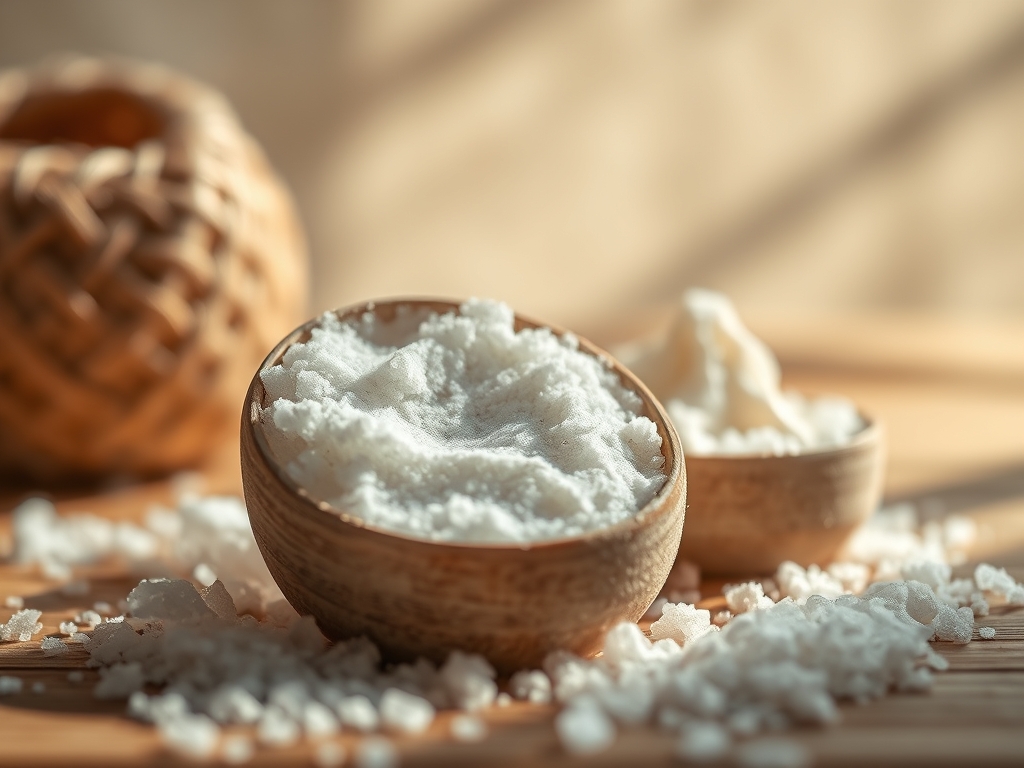
Imagine the sharp, crystalline crunch of mineral grains sliding against the palm of your hand; it is a tactile symphony of geometry and friction. We are not just mixing ingredients here. We are engineering a topical exfoliation system using Natural Sea Salt Scrubs to recalibrate the skin's surface tension. When you press those cubic sodium chloride structures into a carrier oil, you are witnessing a delicate balance of solubility and suspension. The goal is to achieve a slurry that feels luxurious rather than abrasive. We are looking for that perfect "slump" where the salt remains suspended in a viscous lipid matrix without sinking to the bottom of your glass jar. It is about the physics of particle size and the way light refracts through the translucent edges of a high quality salt crystal. Grab your lab coat and your favorite mixing paddle because we are about to turn raw geological materials into a high performance spa treatment that looks as stunning on the shelf as it feels on your shoulders.
THE STUDIO KIT
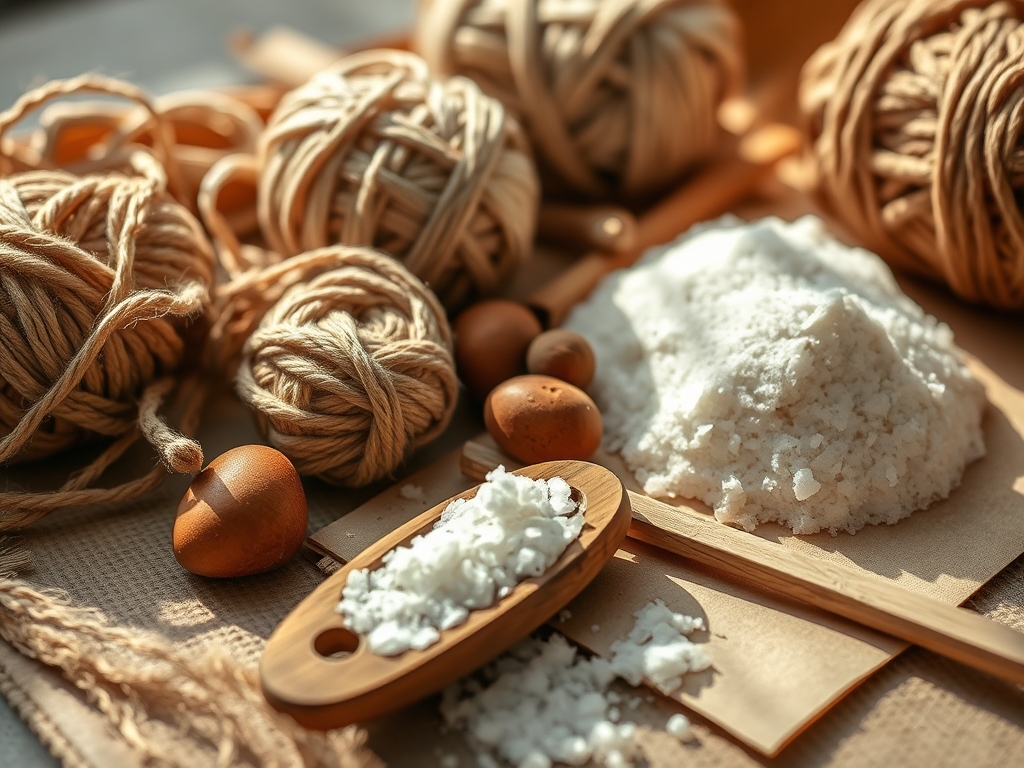
To master the art of Natural Sea Salt Scrubs, you need tools that respect the corrosive nature of salinity while ensuring precise measurements. Start with a high precision digital scale; we are measuring by mass, not volume, to ensure repeatable density. You will need a set of stainless steel mixing bowls because they are non-reactive and easy to sanitize. For the actual blending, an ergonomic silicone spatula is superior to wood, as wood is too porous and can harbor moisture that triggers premature salt dissolution.
You will also need a set of calipers if you are sourcing specialty salts; measuring the average grain gauge ensures your scrub provides consistent mechanical exfoliation without causing micro-tears in the dermis. Your storage vessels must be non-porous glass jars with airtight gaskets to prevent humidity from entering the system.
Material Substitutions: If you cannot find fine-grain Dead Sea salt, you can use a rotary spice grinder to pulse coarse Himalayan salt down to a 0.5mm gauge. If sweet almond oil is unavailable, fractionated coconut oil offers a similar low-viscosity profile that maintains excellent spreadability across the skin.
THE TEMPO
The Maker's Rhythm for this project is divided into three distinct phases: The Calibration, The Infusion, and The Stabilization.
The Calibration (15 Minutes): This is where you measure your dry minerals and check for impurities. You are essentially auditing your raw materials to ensure the structural integrity of the crystals is intact.
The Infusion (20 Minutes): Here, we introduce the lipid phase. This requires a slow, rhythmic folding technique to ensure every facet of the salt crystal is coated in oil, which prevents the salt from clumping due to capillary action.
The Stabilization (24 Hours): The most overlooked phase. You must allow the scrub to sit in its glass jar so the oils can fully permeate the outer layers of the salt. This creates a more cohesive "paste" that won't separate the moment you dip your fingers in.
THE CORE METHOD
1. Sifting the Mineral Base
Before mixing, pass your sea salt through a fine mesh sieve. This removes oversized "outlier" crystals that could cause uneven abrasion. You are looking for a uniform grain distribution to ensure the kinetic energy of your scrub is spread evenly across the skin surface.
Mastery Tip: This process utilizes particle size analysis principles. By ensuring all grains are within a specific micron range, you minimize the risk of "hot spots" where a single large crystal could scratch the skin rather than polish it.
2. The Lipid Saturation
Slowly drizzle your carrier oil into the center of your salt mound. Use a folding motion rather than stirring. You want to coat the grains without fully dissolving them. The oil acts as a lubricant barrier, reducing the coefficient of friction just enough to make the exfoliation comfortable.
Mastery Tip: Watch for the meniscus forming around the edges of the bowl. If the oil pools too quickly, your salt-to-oil ratio is off. You are aiming for a saturated suspension where the oil fills the interstitial spaces between grains without drowning them.
3. Essential Oil Integration
Add your botanical extracts and essential oils. These are volatile compounds, so they must be folded in last to prevent excessive evaporation. The scent molecules bind to the surface of the salt, which acts as a fixative carrier for the fragrance.
Mastery Tip: This involves molecular diffusion. Because salt is hygroscopic, it will naturally draw in some of the aromatic compounds, holding the scent longer than a simple liquid perfume would.
4. The Final Burnish and Pack
Transfer the mixture into your glass jars using a wide-mouth funnel. Use the back of a spoon to lightly press the mixture down, removing air pockets. Air pockets are the enemy; they allow oxygen to sit against the oil, leading to oxidative rancidity.
Mastery Tip: By compressing the scrub, you are increasing its bulk density. This ensures that when you open the jar, the product remains stable and does not shift or separate during shipping or storage.
THE TECHNICAL LEDGER
Maintenance & Longevity: Natural Sea Salt Scrubs generally have a shelf life of six months. To extend this, always use a clean, dry spoon to scoop the product. Introducing water into the jar creates a breeding ground for bacteria and causes the salt to dissolve into a sticky brine.
Material Variations:
- Sustainable: Use reclaimed sea salt harvested from solar evaporation ponds.
- Premium: Incorporate French Grey Salt, which contains higher concentrations of magnesium and iron, offering a more complex mineral profile.
- Recycled: Repurpose glass jars from your kitchen, provided you boil them to ensure they are chemically inert.
The Correction:
- The Separation: If the oil sits on top, the salt grains are too large. Fix: Pulse a portion of the salt in a blender to create "fines" that will help thicken the suspension.
- The Hard Crust: If the top layer turns into a rock, moisture has entered the jar. Fix: Add a teaspoon of vegetable glycerin to act as a humectant and break up the salt bridge.
- The Rancid Note: If it smells like old crayons, the oil has oxidized. Fix: There is no fix for rancidity; prevent this by adding Vitamin E (tocopherol) as a natural antioxidant during the mixing phase.
Studio Organization: Store your salt components in airtight HDPE containers away from direct sunlight. Light can degrade the therapeutic properties of both the oils and the trace minerals in the salt. Label everything with the "Date of Formulation" to track the degradation curve of your lipids.
THE FINAL REVEAL
There is nothing quite like the sight of a freshly packed jar of sea salt scrub. The way the light catches the crystalline facets through the glass is pure aesthetic gold. When you finally use it, the transition from a gritty solid to a silky, skin-softening emulsion is a testament to your precision. You have successfully manipulated mineral physics to create a professional-grade skincare tool. It is functional art at its finest; gritty, glamorous, and scientifically sound.
STUDIO QUESTIONS
Why does my salt scrub feel too sharp?
The grain size is likely too large or the oil-to-salt ratio is too low. Try using a finer gauge salt or increasing the lipid content to provide more lubrication during the exfoliation process.
Can I use table salt for these scrubs?
Table salt is often too processed and contains anti-caking agents like sodium ferrocyanide. These interfere with the mineral absorption and lack the complex crystalline structure required for effective, high-end mechanical exfoliation.
How do I prevent my scrub from leaking oil?
Ensure you are using a jar with a polyethylene liner or a high quality rubber gasket. This creates a mechanical seal that prevents the low-viscosity oils from escaping through the threads of the lid.
Why did my scrub change color over time?
This is usually due to photodegradation or the oxidation of natural pigments in the salt. Store your glass jars in a cool, dark place to maintain the vibrant hues of minerals like Himalayan pink salt.
Is it necessary to add preservatives?
Since salt is a natural preservative and the formula is anhydrous (water-free), you don't need a traditional preservative. However, adding Vitamin E helps prevent the oils from going rancid over time.